 NexiAI
 CleoAI
 VoxAI
VoxAI OttoAI
 RingoAI
 CallumAI
 WinnieAI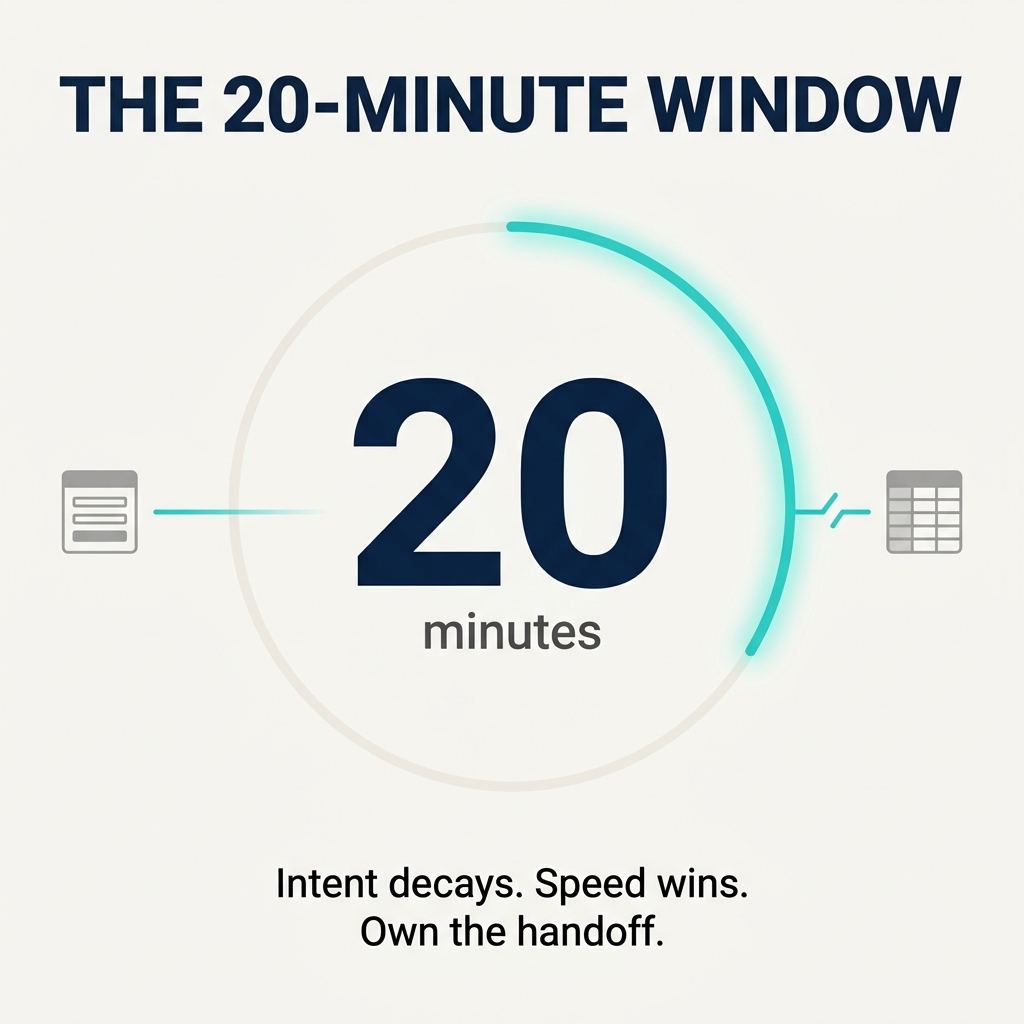
Agencies Deserve Better Than Watching Their Leads Die
TL;DR: Agencies run solid campaigns, leads come in, and then those leads go cold because nobody follows up. The agency gets blamed. The campaign gets cut. And the actual problem, a broken post-capture process, never gets fixed. Agencies that take ownership of what happens after the lead arrives will stop being the first thing clients cut.
At a Glance
Lead follow-up failure is invisible in standard reporting, so agencies absorb blame they don't deserve.
Buyer intent drops sharply in the 20 minutes after a form is filled in. Speed to lead is where conversion rates are won or lost.
Effective follow-up requires three things: speed, consistency, and a named person accountable for every lead.
Feeding closed-deal data back into targeting makes each campaign cycle cheaper and sharper. That's what makes an agency hard to replace.
Simplifying the tech stack and defining clear ownership fixes more leads than increasing ad spend.
The Misdiagnosis That Devalues Good Work
An agency runs a strong campaign. Leads come in. Then those leads sit in a spreadsheet until someone opens the CRM the next morning.
By then, the moment has passed.
The client looks at flat revenue and the agency takes the reputational hit for a leak it never controlled. The campaign gets blamed. The channel gets killed. The real failure sat downstream, in a broken follow-up process nobody owned.
Follow-up failure is invisible in standard reporting. A lead that goes cold in a forgotten spreadsheet looks identical to one that genuinely wasn't interested. The data tells you nothing unless someone connects the two systems. When tools are disjointed and data is scattered, the agency becomes the easiest thing to blame.
💡 Tip: before you accept blame for a campaign, ask one question. How long does it take, on average, for a new lead to receive a human response?
Bottom line: The misdiagnosis happens because post-capture failure leaves no visible trace in most agency reporting. Fix the visibility first.
Why the Window Is Minutes, Not Days
Someone who fills in a form has carved out time, framed their problem, and taken action. They're mentally in the moment. By the next morning, priorities have shifted and inertia has set back in.
Practitioners closest to this problem put the critical window at the 20 minutes after capture. Form builders and landing pages are everywhere now, functionally interchangeable. The competitive edge has moved downstream, to what happens immediately after someone raises their hand.
This is where the 80/20 principle applies. That first response window, a small slice of the funnel, drives a disproportionate share of the results. Studies point to conversion rate lifts of 30 to 70% from faster response alone. Fix that slice before anything else.
Bottom line: Lead capture is a solved problem. The conversion edge now lives in the 20 minutes after, and most businesses aren't touching it.
What Repositioning Actually Looks Like
If you run an agency, the shift worth making is this: sell what happens to leads, not just the leads themselves.
Three elements make up the complete architecture:
Speed. An instant, automated first response the moment a lead arrives.
Consistency. A follow-up cadence that continues until the prospect converts or opts out.
Ownership. A named person accountable for every lead between form fill and first human contact.
Only one of those three is a technology problem. The handoff between marketing and sales tends to behave like two people in the same building who never actually talk. Software can enable speed. Software cannot substitute for organisational clarity about who acts on what signal, and when.
I learned this implementing CRM systems long before I founded NEXUSPRO. The tool matters far less than the accountability built around it. Get the strategy and the ownership model right first, then put the tools in place. Businesses that start the other way round end up with more complexity, not more revenue.
Bottom line: Speed + Consistency + Ownership. That's the complete system. Technology only solves the first one.
The Return Trip Makes You Indispensable
There is a further layer very few agencies offer, and it's the one that cements the partnership.
Advanced teams feed closed-won and closed-lost data back into their targeting and qualification. Each cycle, leads get cheaper and convert better, because the campaign learns from real revenue outcomes rather than just click data.
An agency that runs this feedback loop stops being a vendor the client can swap out. Reporting proves lead quality with closed-deal data. The misdiagnosis narrative loses its grip when the numbers tell a clearer story.
Bottom line: The feedback loop from closed deals back into targeting is where agencies shift from service provider to revenue partner.
Simplify the Stack, Protect Your Value
Fewer disconnected tools. One clear view of the data. A defined owner for every lead. That combination fixes more lead leakage than any increase in ad spend.
For agencies, this reframe protects the value of the work already being done. For clients, it redirects budget from buying more leads to converting the ones already paid for.
Generating the lead is only half the job. Agencies who take responsibility for the second half will stop being the first line item cut, and start being the partner nobody wants to lose.
Map what happens in the 20 minutes after a lead arrives for your top three clients. That single exercise will show you exactly where value is leaking, and exactly where to reclaim it.
Bottom line: Simplified tools and clear ownership convert more leads than bigger budgets. The stack isn't the problem. The accountability is.
Frequently Asked Questions
Why do agencies get blamed for poor conversion rates when the lead follow-up fails?
Because follow-up failure is invisible in standard reporting. A lead that goes cold looks the same as one that never converted. Without a connected view across systems, the last visible action, the campaign, takes the blame.
What does "speed to lead" actually mean in practice?
It means responding to a new lead within 5 to 20 minutes of them submitting a form. Studies suggest this window can improve conversion rates by 30 to 70%. An automated SMS or email sent immediately after capture is the minimum viable version of this.
What is a follow-up cadence, and how should it be structured?
A follow-up cadence is a pre-set sequence of touchpoints after a lead arrives. A simple starting point: day one, day three, day five. Automated messages hold the lead warm until a human can engage. The goal is consistent contact, not volume.
Who should own a lead once it is captured?
One named person. Ownership ambiguity is one of the primary causes of lead leakage. Whether that person is a dedicated sales coordinator, an admin assistant, or a business owner with a clear process, the handover needs to be explicit and documented.
How does feeding closed-deal data back into campaigns improve results?
When campaigns learn from actual revenue outcomes rather than just clicks or form fills, targeting becomes more precise. Leads that match closed-won customers cost less to acquire over time and convert at a higher rate. Each cycle builds on the last.
How do I know if my lead follow-up process is broken?
Ask how long it takes for a new lead to receive a human response. If the answer is more than 20 minutes, or if nobody knows the answer, the process needs work. Mapping the 20 minutes after capture for three to five recent leads will surface the problem quickly.
Can automation fully replace a human in the follow-up process?
Automation covers speed and consistency. A human is still required for qualification, relationship building, and closing. The best setup uses automation to make sure no lead goes cold while a human is unavailable, not to replace the human entirely.
Key Takeaways
Lead follow-up failure is the most common cause of poor conversion rates, and agencies absorb the blame because the failure is invisible in standard reporting.
The critical window for engaging a new lead is the 20 minutes after capture. Response time alone can lift conversion rates by 30 to 70%.
Effective lead follow-up rests on three pillars: speed, consistency, and ownership. Only speed is a technology problem. The other two require organisational clarity.
Feeding closed-deal data back into campaign targeting creates a compounding improvement cycle, making each lead cycle cheaper and more precise.
Simplifying the tech stack and defining clear lead ownership produces better conversion results than increasing ad spend.
Agencies that take responsibility for post-capture execution become revenue partners rather than replaceable vendors.

