

The Campaign Worked. Then Nobody Followed Up.
TL;DR: Most service businesses lose revenue not because their campaigns fail, but because their follow-up does. Leads arrive, sit unattended, and go cold while the owner debates changing the ad strategy. The fix is operational, not creative.
Generating a lead is only half the job. Converting it is the other half, and it's where most businesses fall short.
Buyer intent fades fast. A lead who fills in a form at 9am is a different person by 9am the next day.
Responding within 20 minutes can lift conversion rates by 30 to 70%.
Unclear ownership, not bad software, is usually what lets leads go cold.
A simple day-one, day-three, day-five follow-up sequence beats doing nothing by a wide margin.
Why Businesses Blame the Campaign When the Problem Came After It
The campaign runs. Leads come in. Six weeks later, the owner tells me the marketing failed, cuts the budget, and starts looking for a new agency or a different channel.
When I dig into what actually happened, the campaign did its job. The leads arrived. Then they sat in an inbox, a spreadsheet, or a CRM queue that nobody opened until the next morning.
The campaign got blamed for a failure that happened well after the lead was captured.
Service business owners tend to think marketing is more mysterious than it is. In reality, it splits into two halves. The first half earns attention and captures interest. The second half converts that interest into a conversation and a sale. Most businesses only manage the first half with any discipline.
Key Point: Generating the lead is only half the job. The second half is selling, and it is the half that most teams leave on the table.
What Happens in the 20 Minutes After a Lead Comes In
Kathleen Booth made this point in a LinkedIn post that drew over a thousand comments. The consensus across hundreds of substantive replies was striking. Marketers, agency owners and consultants kept describing the same situation. Leads go cold in a forgotten spreadsheet while everyone debates targeting and ad spend.
"The capture side is solved territory at this point. The gap I keep seeing is the 20 minutes after." — Srikanth Inuganti, commenting on the post
That 20-minute window matters because of how buyers actually behave. Someone who fills in a form is mentally in the moment. They have carved out time, framed their problem, and taken action.
By the next morning, their context has shifted. Priorities have moved. A reply that lands the following afternoon meets a person who has already moved on mentally. Expressed intent fades fast, and that is a cost most businesses never account for.
Studies suggest that responding to a lead within five to fifteen minutes can push conversion rates up anywhere between 30 and 70%. Not from a better campaign. Not from better targeting. Just from being first.
Key Point: Speed-to-lead is one of the highest-leverage moves available to a service business. The window is shorter than most owners assume.
Where the Real Leak Is: Ownership
When I audit follow-up in small service businesses, the tools usually exist. The forms work. The problem sits in a simple, unanswered question: who owns the lead between the form fill and the first human contact.
One commenter on Booth's post described marketing and sales as two roommates who never talk to each other. That lands because it names an organisational problem, not a software one. Buying another tool solves nothing when nobody is accountable for acting on the signal.
In smaller service businesses, the founder is often the one handling leads. And founders are pulled in every direction. They are out on jobs, solving problems, managing staff. A lead can sit for a day or two not because the founder doesn't care, but because they are buried. That bottleneck is the single most common leak I see.
Disjointed tools and scattered data make it nearly impossible to get a clear picture of what is working. And they make it very easy for a warm lead to slip through unnoticed.
Key Point: Unclear ownership between form fill and first contact is the most common reason leads go cold. It is an organisational issue, not a technical one.
How to Fix It: Speed, Consistency, and Ownership
The discussion around Booth's post kept returning to a framework worth writing on your wall. Scott Aaron summed it up: speed, consistency, and a clear next step turn interest into conversations and conversations into clients.
Here is how that applies in practice:
Speed. Set up an instant, automated first response the moment a lead comes in. Aim for a human follow-up within that 20-minute window. Even an automated SMS or email on day one is better than silence.
Consistency. Build a follow-up cadence that continues until the lead replies or opts out. A day-one, day-three, day-five sequence is a straightforward minimum. One call and a shrug is where pipelines die.
Ownership. Give every lead a named owner. One person, accountable, with the lead visible in one system rather than spread across five.
This is the 80/20 principle applied to marketing operations. A small number of fixes after lead capture will return more than additional ad spend at the top of the funnel.
Key Point: Speed plus consistency plus clear ownership. Those three things close more leads than a bigger ad budget will.
Start Qualifying Leads Before a Human Picks Up the Phone
There is a step that comes before follow-up that very few service businesses have thought through: the quality of the capture itself.
A basic contact form that asks for a name, an email, and a rough description of the job treats every enquiry identically. That works up to a point. But if the form asks two or three qualifying questions, things change immediately.
A landscaping business, for example, could ask what the budget range is, how urgent the job is, and what the overall goal looks like. That information is available before anyone picks up the phone. It changes how the lead gets followed up, and it allows a much more tailored response than a one-size-fits-all reply.
Less than 10% of the service businesses I work with have this level of thinking built into their capture process when they first come to us. It is one of the fastest wins available.
AI-assisted qualification is now making this even more accessible. A well-designed intake flow can begin the sales conversation before a human ever gets involved. By the time someone does follow up, they already know whether they are dealing with a serious buyer or a tyre-kicker.
Key Point: Lead qualification starts at the capture stage, not after. Building two or three qualifying questions into the form changes the quality of every follow-up conversation.
Before You Cut the Budget, Check the Follow-Up
Before blaming a campaign for a disappointing quarter, trace what actually happened to the leads it produced.
Three questions get to the truth quickly:
How quickly did someone respond to each lead?
How many touches did each lead receive?
Who was accountable for each one?
Honest answers to those three questions will reveal the real problem within an hour. The fix costs far less than a new campaign. And it makes every future campaign more profitable because the leads finally get worked properly.
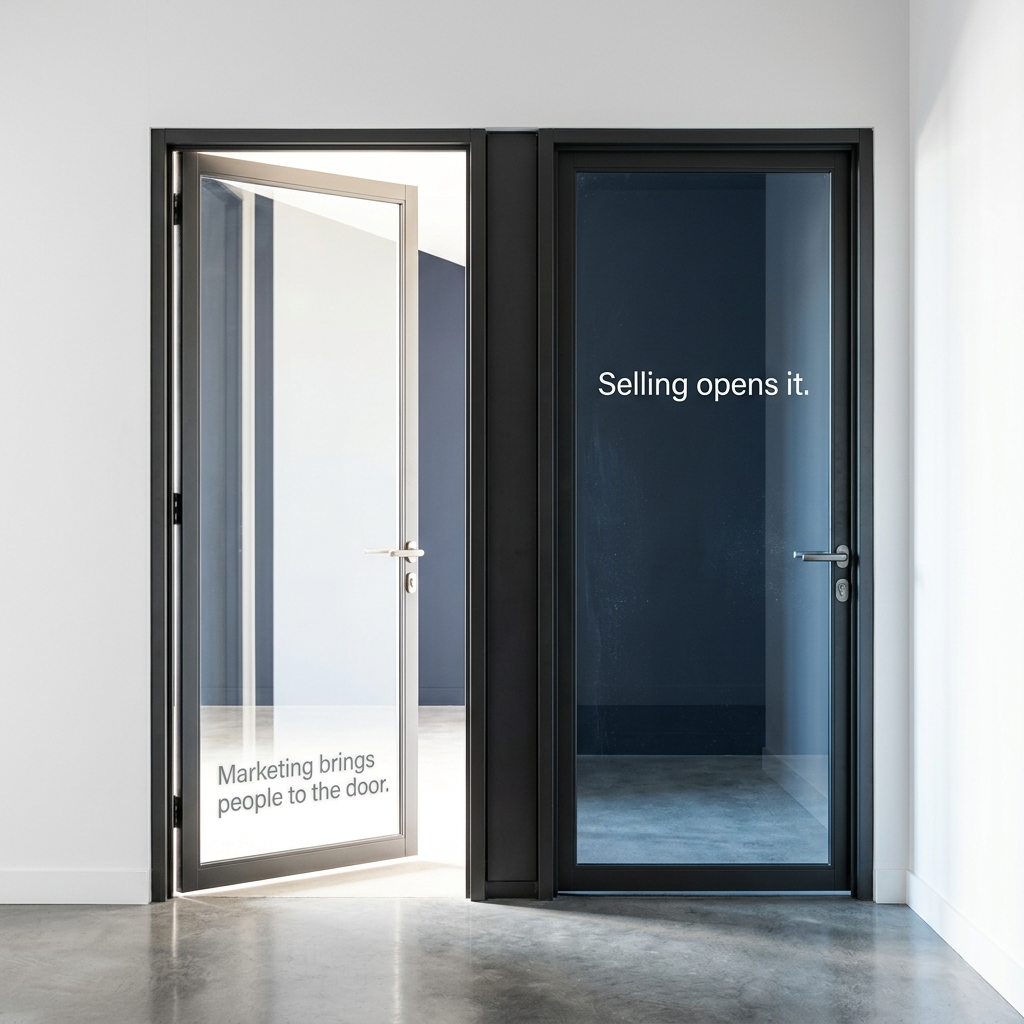
Marketing brings people to the door. The follow-up opens it. Service businesses that treat the second half of marketing with the same discipline as the first half grow with less stress and less wasted spend.
The diagnosis is rarely a bad campaign. Usually, nobody followed up.
Key Point: Auditing the follow-up process is almost always more valuable than reviewing the campaign. Do that first.
Frequently Asked Questions
How quickly should a service business respond to a new lead?
Within five to fifteen minutes where possible. Studies indicate that responding within this window can improve conversion rates by 30 to 70% compared to responding the following day.
What is the minimum follow-up system a small service business should have?
An automated response on day one, a follow-up on day three, and another on day five. That can be an SMS, an email, or both. It keeps the lead warm until a human can engage properly.
Who should own leads in a small service business?
One named person per lead, with that lead visible in a single system. When ownership is shared or unclear, leads fall through. An admin coordinator or sales-focused staff member is often more reliable than the founder, who is typically pulled in too many directions.
Why do service businesses blame campaigns when follow-up is the real problem?
Because the campaign is visible and measurable. Ad spend, click rates, and cost-per-lead are easy to point at. What happens after the form fill is less tracked and harder to defend, so it tends to go unexamined.
What qualifying questions should be included in a lead capture form?
It depends on the business, but useful examples include budget range, urgency, and the specific outcome the prospect is looking for. These three data points alone allow for a much more targeted follow-up conversation.
Does AI have a role in lead qualification?
Yes. AI-assisted intake flows can begin qualifying a lead immediately after form submission, before any human involvement. This shortens the time to a meaningful conversation and helps prioritise which leads to call first.
How does the 80/20 principle apply to lead follow-up?
A small number of operational fixes after capture, specifically response speed, a consistent cadence, and clear ownership, tend to produce the majority of the conversion improvement. More ad spend rarely compensates for a broken follow-up process.
What does a good lead follow-up cadence look like?
Day one: immediate automated response, plus a personal call or message if possible. Day three: a follow-up check-in. Day five: a final touchpoint before the lead is moved to a lower-priority queue. Adjust based on typical sales cycle length for your business.
Key Takeaways
Generating a lead and converting a lead are two separate jobs. Most service businesses only have a process for the first one.
Buyer intent fades within hours of an initial enquiry. Speed-to-lead is one of the most impactful variables in conversion.
Responding within 20 minutes can lift conversion rates by 30 to 70%.
Unclear ownership between form fill and first contact is the most common reason leads go cold. It is an organisational problem, not a software problem.
A basic day-one, day-three, day-five automated sequence is the minimum viable follow-up system for any service business.
Lead qualification starts at the capture stage. Two or three well-chosen questions on the form change the quality of every follow-up conversation.
Before cutting campaign budget, audit the follow-up first. The campaign is rarely the problem.